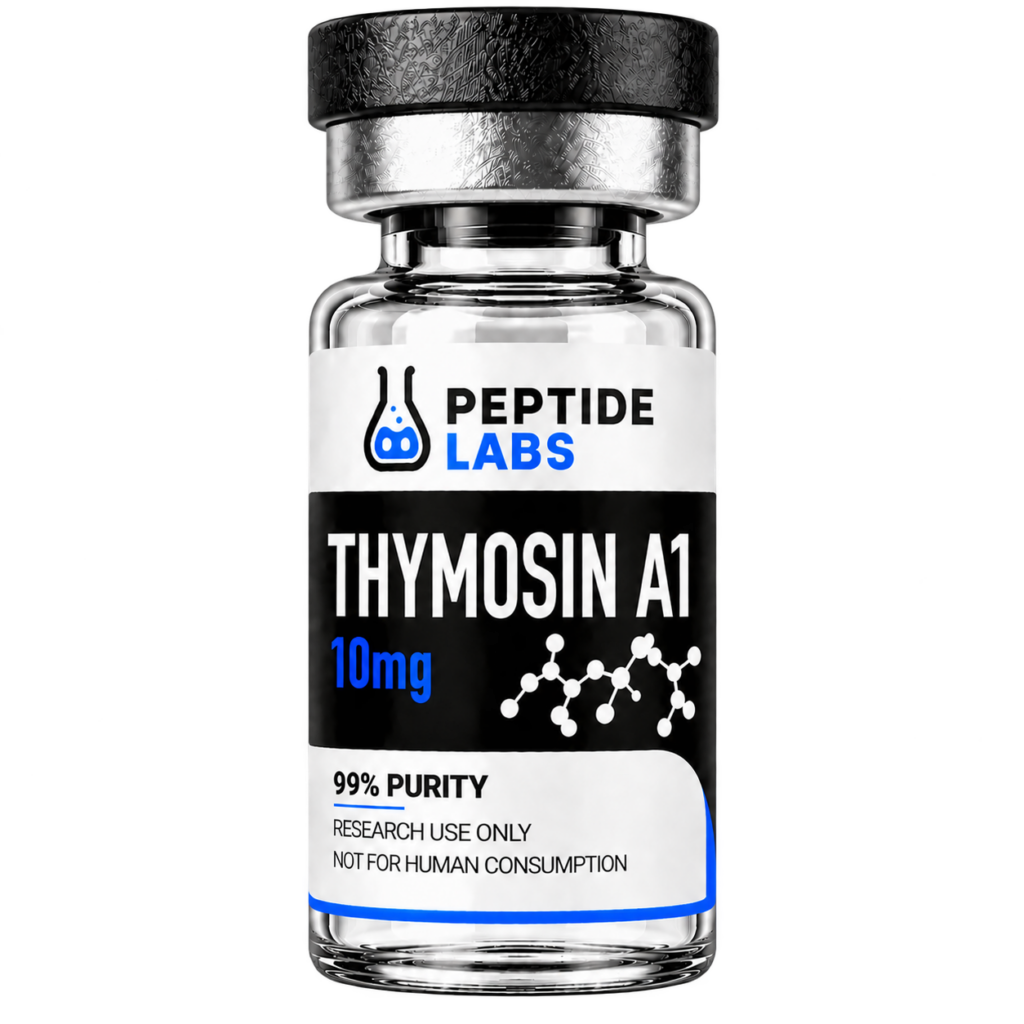
Thymosin α-1
View testing results & request a batch-specific COA →
Select an available format to see pack pricing.
Research notes & technical details
Thymosin α-1 for Research Use
Table of Contents
Thymosin α-1 is a immune-signalling peptide studied in T-cell, cytokine and immune-modulation research. This PeptideLabs product page is structured for researchers who need clear specifications, compliant handling notes, and context for designing controlled laboratory experiments. The material is supplied strictly for research use only and is not intended for human or veterinary administration, diagnostic use, therapeutic use, or consumer application.
The main purpose of this page is to help laboratory buyers evaluate Thymosin α-1 as a research material rather than as a medical product. The content below explains the scientific background, proposed research mechanisms, typical application areas, storage expectations, reconstitution considerations where applicable, and quality-control points that support careful experimental planning.
Scientific Overview of Thymosin α-1
Thymosin α-1 is positioned for controlled research programs focused on immune-signalling peptide studied in T-cell, cytokine and immune-modulation research. Researchers usually select this material when a defined compound or peptide profile is needed for repeatable assays, comparison studies, or exploratory pathway research. Because experimental outcomes depend on model design, concentration selection, solvent system, controls, storage history, and analytical endpoints, all conclusions should be drawn only within the limits of the laboratory protocol.
Thymosin α-1 Mechanism of Action in Research Models
Thymosin alpha-1 is investigated for immune-cell signalling, T-cell maturation markers, cytokine balance, antigen-presentation pathways and innate-adaptive immune communication. These mechanisms are described as research areas, not clinical outcomes. The correct interpretation of any result depends on the biological model, assay sensitivity, positive and negative controls, exposure period, analytical method, and the reproducibility of the dataset.
Mechanism-focused studies may include receptor-pathway assays, biomarker panels, gene-expression analysis, protein-expression studies, cell-viability controls, migration assays, metabolic marker analysis, or stability testing. Researchers should document the material lot, preparation method, solvent, concentration range, storage condition, and timing of each experiment so that data can be reviewed and repeated.
Research Applications
Thymosin α-1 is suitable for research programs where the investigator needs a clearly identified material and a focused scientific rationale. It may be used as a standalone research item or as part of a broader comparison matrix with related peptides and laboratory supplies from PeptideLabs.
Common laboratory research areas include:
- T-cell and immune-signalling assays
- cytokine marker research
- innate and adaptive immune pathway studies
- comparison with KPV and Selank
- analytical purity, solubility and handling observations
- comparative research with KPV, Selank, BPC-157 and Glutathione
Researchers who are building a multi-product study can use internal links to map peptide families by category. For example, recovery-pathway studies may compare BPC-157, TB-500 and GHK-Cu; mitochondrial studies may compare MOTS-c, SS-31 (Elamipretide) and NAD+ Injectable; and secretagogue studies may compare CJC-1295 No DAC, Ipamorelin and Sermorelin.
Product Specifications
- Product name: Thymosin α-1
- CAS number: 62304-98-7
- Purity: ≥99%
- Form: Lyophilised powder
- Recommended storage: -20°C
- Use classification: Research use only
These specifications support receiving inspection, inventory records, study design, and internal documentation. If a certificate of analysis or batch-specific document is available, researchers should keep it with the study file and cross-check product identity, purity, appearance, and lot details before use.
Storage and Handling Information
Thymosin α-1 should be stored according to the product specification, with -20°C used as the primary reference from the PeptideLabs catalog data. Lyophilised peptide materials are generally protected from unnecessary heat, moisture, and repeated freeze-thaw exposure. Researchers should keep vials sealed until preparation and allow cold materials to equilibrate before opening when condensation risk is present.
All handling should follow institutional laboratory safety procedures. This includes appropriate personal protective equipment, clean preparation surfaces, labelled containers, controlled disposal, and accurate record keeping. If the material is moved between storage locations, the transfer time and temperature exposure should be documented.
Reconstitution and Preparation Notes
Thymosin α-1 may require reconstitution before certain research workflows. The solvent system should be chosen by the investigator based on the assay design, compatibility requirements, and institutional protocol. PeptideLabs also carries Bac Water 10ml and Bac Water 3ml for laboratories that require bacteriostatic water as part of a peptide-preparation workflow.
Preparation records should include product name, lot number, solvent, target concentration, date prepared, storage temperature, operator initials, and intended assay. Gentle mixing is typically preferred over aggressive agitation for peptide solutions. This section is not dosage guidance and must not be interpreted as instructions for administration.
External Research Resources
For independent literature discovery, researchers can review a PubMed literature search for Thymosin α-1 and compare findings with their own protocol, controls, and institutional review process.
Quality Assurance and Documentation
Quality assurance for Thymosin α-1 includes both the supplied material and the way the laboratory handles it after receipt. Researchers should inspect the vial, confirm product identity, review available purity information, verify storage conditions, and record all preparation details before starting experiments.
For stronger data integrity, studies should include suitable controls, repeat measurements, documented acceptance criteria, and a clear distinction between exploratory findings and validated conclusions. Internal linking between related PeptideLabs products supports topical navigation, but scientific decisions should always be based on the study objective and protocol.
Thymosin α-1 FAQ
What is Thymosin α-1 used for in research?
Thymosin α-1 is used in laboratory studies involving immune-signalling peptide studied in T-cell, cytokine and immune-modulation research. It is supplied for research use only.
Is Thymosin α-1 intended for human use?
No. Thymosin α-1 is not intended for human or veterinary use, treatment, diagnosis, supplementation, cosmetic application, or self-administration.
Does PeptideLabs provide dosage instructions?
No. Because Thymosin α-1 is a research-use-only material, PeptideLabs does not provide dosage, cycle, administration, or treatment instructions.
How should Thymosin α-1 be stored?
The catalog storage reference for this product is -20°C. Researchers should also follow their institutional protocol and any batch-specific documentation.
Can Thymosin α-1 be compared with related peptides?
Yes. Researchers may compare Thymosin α-1 with materials such as KPV, Selank, BPC-157, and Glutathione when the study design supports that comparison.
What records should be kept for this product?
Recommended records include product name, lot number, supplier, receipt date, storage conditions, solvent, concentration, preparation date, assay use, and disposal notes.
Research Use Only
Thymosin α-1 is supplied strictly for in-vitro laboratory research. It is not intended for human or veterinary use, diagnosis, treatment or self-administration. Handle only in accordance with applicable laboratory procedures and institutional protocols.
Thymosin α-1: product and ordering information
Review the specifications and technical notes for Thymosin α-1 before ordering for qualified laboratory research. Check the listed price and availability above; where options are offered, select the required format before ordering.
Availability: Available formats are shown in the product selector.
Product reference: THYMO-10MG
Category: Recovery
Orders are supplied throughout India. See the shipping policy for dispatch and delivery information and refund and returns policy.
Documentation and laboratory handling
- Request the relevant product and batch documentation before ordering.
- Read our guide to peptide certificates of analysis and HPLC purity testing when reviewing peptide reports.
- Follow the product-specific storage instructions and laboratory storage and handling guide where applicable.
For in-vitro laboratory research only; not for human or veterinary administration. Read the research-use policy.
Browse the full research product catalogue · Explore research documentation
Reviews
There are no reviews yet.